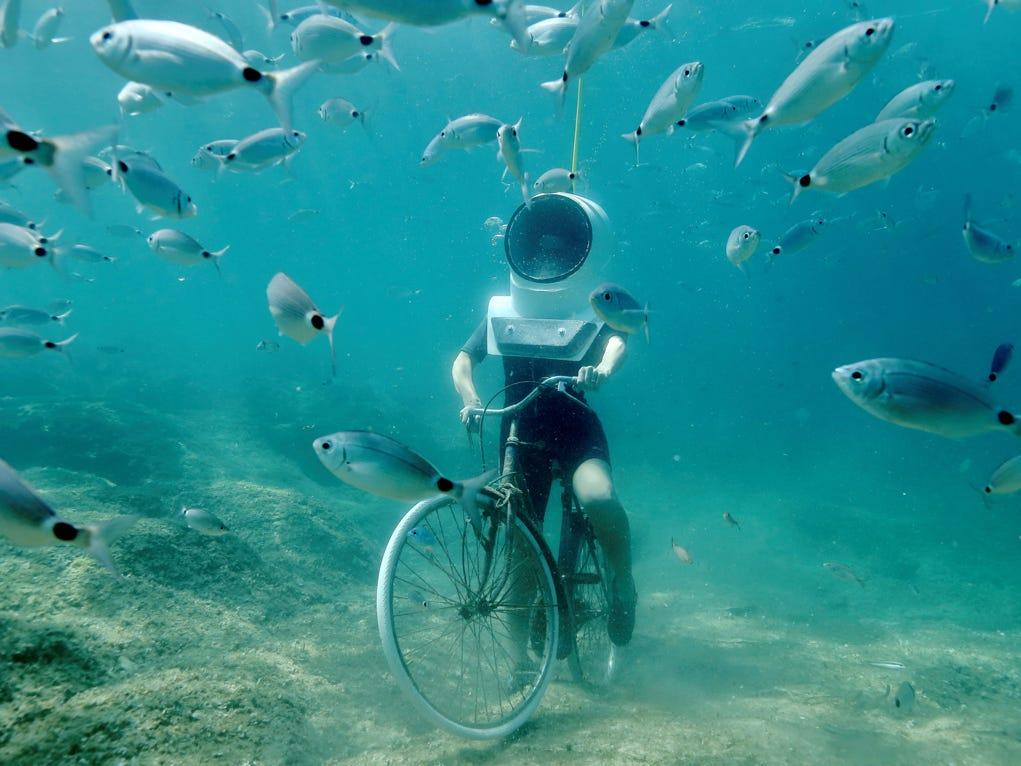
Underwater Cycling is a niche and unusual sport where participants ride specially designed stationary bicycles submerged in water, typically in a swimming pool. Combining elements of fitness training and novelty competition, it challenges coordination, endurance, and breath control in a completely unconventional environment. Here are the key aspects of Underwater Cycling:
Origin:
Underwater cycling does not have a single clear origin like traditional sports. It evolved from aquatic fitness practices such as aqua aerobics and rehabilitation exercises, where water resistance is used to reduce joint strain while increasing workout intensity. Over time, it developed into a more structured and occasionally competitive activity.
Rules and Structure:
The format of underwater cycling varies depending on whether it is recreational or competitive:
- Participants use specially weighted stationary bikes fixed to the pool floor.
- Sessions usually take place in shallow pools, allowing riders to remain seated while submerged.
- In some variations, riders wear goggles or snorkels, while others keep their heads above water.
- Competitive formats may involve timed races, distance goals, or endurance challenges.
- Resistance levels can be adjusted, making the activity physically demanding despite the slow appearance.
Winning the Activity:
In competitive settings, winners may be determined by:
- Covering the greatest “distance” on the bike within a set time.
- Maintaining the highest cadence or resistance level.
- Outlasting other participants in endurance-based challenges.
In many cases, however, underwater cycling is more about participation and performance than strict competition.
Training and Strategy:
Participants focus on leg strength, stamina, and controlled breathing. The water adds natural resistance, meaning muscles work harder with less impact on joints. Strategy can involve pacing energy, maintaining balance underwater, and adapting to the resistance created by water movement.
Popularity and Events:
Underwater cycling remains a very obscure activity and is most commonly found in fitness centers, spas, and specialized aquatic training facilities. While not widely recognized as a mainstream sport, it occasionally appears in novelty competitions or demonstrations.
Cultural Impact:
The sport stands out mainly for its unusual visual appeal—riders pedaling underwater creates a surreal and almost humorous image. It reflects a broader trend of inventing creative hybrid or environment-based sports that challenge traditional ideas of athletic competition.
Underwater cycling is a quirky blend of exercise and experimentation, transforming a simple activity like biking into something entirely unexpected by placing it beneath the surface.